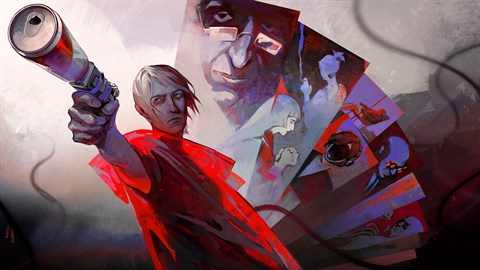
ZA/UM's espionage RPG is more interesting when a plan goes wrong. Its official mechanics suggest a spy story shaped by improvisation, pressure, and unreliable advice.
The mission starts with a broken network
ZERO PARADES: Director's Cut introduces its player as an operant on one final desperate assignment. The official site says the goal is to gather a broken network, untangle lies, and prove yourself on a world stage. That is a sharp starting point for an espionage RPG. A spy is usually imagined as a person with control: prepared identities, dependable contacts, and an exit plan. This protagonist seems to begin with the opposite. The network is damaged before the player can lean on it, so trust itself becomes a problem to solve.
ZA/UM's site describes a three-way struggle for cultural and ideological power across a new city. It says everyone you meet carries agendas and secrets, and you need people despite not beginning with reliable friends. That combination gives conversations practical stakes. A contact might be useful, deceptive, both, or neither. The site does not publish a complete relationship system, so it would be wrong to promise a numeric trust meter or every possible betrayal. What we can say is that unstable relationships are central to the official pitch, not optional flavor around the mission.
Failure is written into the route forward
One of the clearest mechanics on the official site is fail forward. ZA/UM describes a closed door as an opportunity to use a window instead. That phrase suggests an RPG in which a failed attempt can redirect the story rather than stop it cold. The difference is important. If every unsuccessful roll simply asks for a reload, players learn to save-scum until they see the preferred outcome. If failure produces a new complication, they may be willing to live with a messy result and discover a story they would not otherwise have seen.
We should not pretend every failure is guaranteed to be interesting. The official page gives a design principle, not a catalog of outcomes. Still, it is a meaningful promise because espionage fiction thrives on imperfect information. A lie believed too soon, a contact approached at the wrong time, or a failed infiltration can all create tension when the world responds. That is an inference about the genre, not a confirmed list of quests. The feature to watch in actual play is whether the game lets mistakes become scenes rather than merely punishments.
The skills are advisers with opinions
ZA/UM says the operant's skills talk to the player, offering advice that should not always be trusted. This is more than a colorful way to display a stat bonus. When internal skills become voices, a decision can feel like an argument inside the character rather than a menu choice from outside the story. The player has to decide which perspective is useful and which one is colored by fear, habit, or ambition. The official site does not specify the exact number of skills or how often they interrupt, so those details belong to the game itself.
The design opens a clever possibility: knowledge and confidence can diverge. A skill may sound certain without being correct, while a quieter one may point toward a safer route. That is a reading of the mechanic, not a spoiler or a guaranteed script pattern. In a spy story, unreliable advice can reinforce the larger theme of broken trust. It also gives role-playing a sharper texture. Your operant is not a blank detective who receives neutral hints; they are someone whose own trained instincts may have to be questioned.
Dice rolls can be pushed, but at a cost
The official mechanics list includes pressures and exertion: the player can accept penalties and debuffs to force the dice toward a preferred result. That makes uncertainty an active resource decision. A desperate agent might get through a scene by spending more than they should. The immediate success then carries a possible cost into whatever follows. This is a stronger dramatic fit for espionage than a simple pass-or-fail check because the choice to push becomes part of the character's judgment.
We cannot calculate an optimal exertion strategy from the public description. ZA/UM does not provide a full formula on the page, and players may value different outcomes. The interesting question is whether a result is worth the future penalty. If you press for a critical contact now, will you regret having less room to maneuver later? If you accept failure, will the story open a different angle? Those are the kinds of decisions the confirmed system seems designed to create. The final feel depends on implementation, not marketing language alone.
Dramatic Encounters slow time for improvisation
ZA/UM describes Dramatic Encounters as moments where time freezes in Tactical View and the player rolls dice to improvise an unlikely outcome. The phrasing suggests set pieces built around decisions under pressure, not a conventional cover-shooter combat loop. Its official feature list also mentions tools for access, manipulation, disguise, and subterfuge. Together, those details describe a spy fantasy where preparation and improvisation share the stage. There may be danger and urgency, but the published mechanics put choices and tool use at the center.
A system like this can make the transition from conversation to action feel smoother. The same social risks that shape a contact may influence a tense encounter, while a tool in your inventory could become a way through an unexpected obstacle. That is editorial interpretation. The official page does not promise that every item works in every scene or that every encounter can be solved without conflict. The design question worth following is whether the player feels they are improvising as an agent, or merely selecting the one obvious answer the scene was built to accept.
The Director's Cut adds reasons to return
The current official site highlights the Director's Cut as a free update on PC and a console release planned for November 3. Its feature list names a new Dramatic Encounter, Backstage Mode, ultrawide support, new outfits, full voice-over, inventory sorting, Tarot Cards, and new death scenes. These are concrete additions, but the site gives different levels of detail for each. For example, it names Backstage Mode without explaining every menu and reward. It would be premature to turn that label into a promised developer-commentary archive without a direct source.
What the list does show is a broad revision rather than only a new platform checkbox. Some additions affect presentation, some convenience, and at least one appears to add a new scene. That matters for two audiences: newcomers who want the most complete version, and PC owners deciding whether to return. The update's value will vary with what each player wanted from the original. A cleaner inventory might matter more to a systems-minded player than extra clothing, while another may return for the additional encounter. The official list helps set those expectations without overclaiming.
Why this design is worth watching
ZERO PARADES presents spying as a tangle of people, unreliable internal voices, risky dice, and plans that can go wrong. The confirmed systems support that reading: broken network, talking skills, fail forward, pressures and exertion, Dramatic Encounters, and tools for disguise or manipulation. They do not prove every story branch works beautifully, nor do they justify comparing the game to a specific older title scene by scene. A feature article can explain the design ambition while leaving room for the finished experience to surprise or disappoint.
The most useful way to approach the Director's Cut is to ask how its mechanics make you feel like an operant with imperfect control. Do choices change relationships? Do failed attempts create stories? Does pushing a roll feel costly? Those are questions players can answer through play rather than pre-release speculation. ZA/UM has given enough official detail to make the concept clear. The appeal lies in a spy game where mistakes are part of the mission, and the voices offering help may be another thing you need to investigate.
CHECK THE ORIGINALS.
Facts and update details above are based on these official sources. Details can change as the game is updated.
- ZERO PARADES official site ↗ZA/UM Studio
- ZERO PARADES Director's Cut Xbox listing ↗Microsoft / ZA/UM
Loading comments…