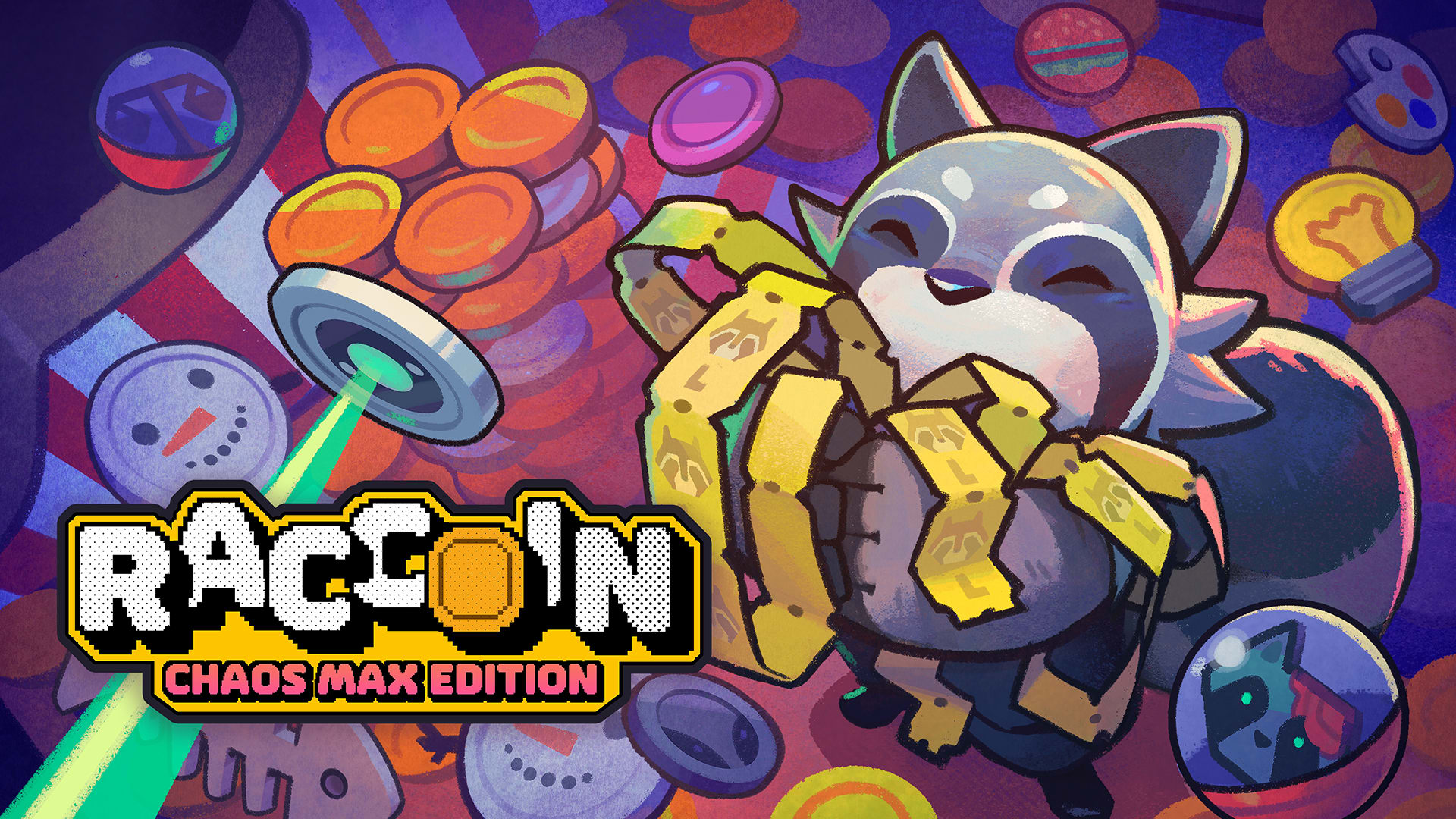
RACCOIN takes the familiar coin-pusher cabinet and adds roguelike choices. Special coins, powerful items, eight distinct characters, and chain reactions make each run about shaping a high-score engine, not just waiting for tokens to fall.
A coin pusher is a tiny machine with a big feedback loop
RACCOIN: Chaos Max Edition starts from an arcade idea most people can understand in seconds: drop coins, watch them move, and hope the next push sends a satisfying pile over the edge. Nintendo’s showcase description adds the twist. This is a coin-pusher roguelike where special coin types and powerful items can trigger combos, with the aim of chasing high scores. The familiar cabinet gives the player an immediate mental model, while the unusual pieces create room for strategy and surprise.
That combination is why the game has a strong feature hook. A coin pusher is usually associated with luck and short bursts of play, but roguelike systems invite players to think about builds and run-to-run variation. The player is not only asking whether a coin will fall; they are looking for interactions that might make the next drop more valuable. Nintendo confirms the broad systems, but has not published a full catalogue of coin effects or item synergies in the showcase article, so exact combo recipes should be learned in the demo rather than invented here.
Special coins turn simple drops into decisions
The most important announced system is the interaction between special coin types and items. A regular coin creates the basic push, but a special one can change what happens when it lands or contacts other pieces. That can turn a simple action into a decision about timing and placement. Should you drop a coin now to move the pile, or wait until a modifier makes the next push more likely to trigger a chain? Those questions are the strategic layer implied by the confirmed design.
A good coin-pusher game needs to preserve the tactile pleasure of watching the shelf move. If every moment becomes menu management, the arcade fantasy loses its punch. The design challenge is to make choices legible while keeping the action quick: players should understand why a combo happened, then feel motivated to try another setup. We do not know all the interface details yet, but a free demo is available according to Nintendo’s showcase. That gives interested players a direct way to judge whether the systems feel readable and satisfying.
The roguelike format gives a cabinet a reason to invite another run
Roguelike structure works well with games built around combinations because each run can encourage a different approach. Nintendo describes special coins, powerful items, high-score chasing, and eight characters with their own themed coins and playstyles. Together, those features suggest that a player’s best route through a run may change depending on the character and the options that appear. The official description does not give the full progression rules, so it is too early to say what carries over between attempts or whether every run uses randomized rewards.
Even without those details, the design promise is easy to see. A character who changes the coin set can change what the player values. A run that offers one kind of item might reward frequent small drops, while another setup might favor saving for a larger chain. These are possible strategic consequences, not confirmed optimal builds. The useful first-session approach is to notice what the current character does differently and test one interaction at a time. That makes it easier to learn why a high-score run worked instead of treating every result as pure luck.
Eight characters can make play style visible
Nintendo says RACCOIN has eight distinct characters, each with themed coins and playstyles. That is a meaningful amount of variety for a compact arcade concept. Character selection can help players find a comfortable entry point: one might like obvious effects, another may prefer unusual combinations, and a score chaser might enjoy a character that rewards precise setup. The announcement does not name all eight characters or give detailed stats, so we will not assign them roles the developer has not confirmed.
Thematic coins can also make a run easier to read. When effects have a consistent visual identity, players can remember what they are trying to build and spot promising pieces more quickly. That visual clarity matters in a cabinet-style game where the playfield is always moving. It can turn mastery into pattern recognition: learn which pieces interact, notice when the shelf is ready, and make a deliberate drop. The demo is the best place to judge whether the characters feel meaningfully different or mostly cosmetic.
Switch 2 support is built into the arcade framing
Nintendo says the Switch 2 version includes an exclusive in-game arcade cabinet skin and supports Joy-Con 2 mouse controls. Those are small but relevant platform details. A mouse-style input could suit aiming or precise coin placement if the control scheme uses that kind of targeting; the official announcement confirms support but does not explain every use case. The cabinet skin, meanwhile, reinforces the fantasy that the player is interacting with an arcade machine rather than a generic menu screen.
The platform feature should be treated as an option, not a requirement. Players may prefer buttons, mouse-style motion, or handheld play depending on comfort. Since Nintendo also says the game has a free eShop demo, testing the controls before launch is a practical step. Pay attention to whether the input feels accurate, whether the action remains readable on a small screen, and whether the pace works for quick sessions. That hands-on check will tell you more than a feature list can.
The demo makes this one easy to sample before committing
Nintendo’s October 29 showcase says a free demo for RACCOIN: Chaos Max Edition is available now on eShop. The same announcement lists an 11 November 2026 launch for Nintendo Switch 2 in Australia and New Zealand. That territory-specific wording matters: dates and availability can differ by region, so check your local Nintendo eShop for the version shown in your country. The showcase also names Playstack and Doraccoon as the companies behind the game.
A short demo can answer the questions that matter most for a score-based arcade game. Does dropping a coin feel responsive? Can you understand why an item caused a combo? Does the run stay interesting after the first few minutes? And do the character differences change your decisions? A trailer can communicate visual energy, but it cannot tell you whether the feedback loop is satisfying in your own hands. Try the demo with a high-score goal and see whether you want to run it again after a failed attempt.
Who will get the most from RACCOIN?
RACCOIN looks well suited to players who like short arcade sessions, visible cause and effect, and the pleasure of building a high-score chain. The coin-pusher theme gives it a clear identity, while the roguelike framing and character-specific coins promise variety. It may also work for people who enjoy watching a run unfold and then adjusting their plan. If you are looking for a deep story campaign or a traditional competitive multiplayer mode, Nintendo’s current feature description does not position the game that way.
The main question is whether RACCOIN can balance chance with player control. Coin pushing naturally includes uncertainty, but special pieces, items, and character choice can give players ways to influence outcomes. The demo is the right test for that balance. Approach it as an arcade toy first, then look for the decisions beneath the spectacle. If those choices feel understandable and runs produce different kinds of satisfying reactions, this could be an easy game to revisit between longer releases. That is the promise of RACCOIN’s unusual coin-pusher roguelike design.
CHECK THE ORIGINALS.
Facts and update details above are based on these official sources. Details can change as the game is updated.
- New Indie World Showcase features cosy and chaotic fun ↗Nintendo
- RACCOIN: Chaos Max Edition ↗Nintendo Indie World
- RACCOIN on Steam ↗Playstack
Loading comments…