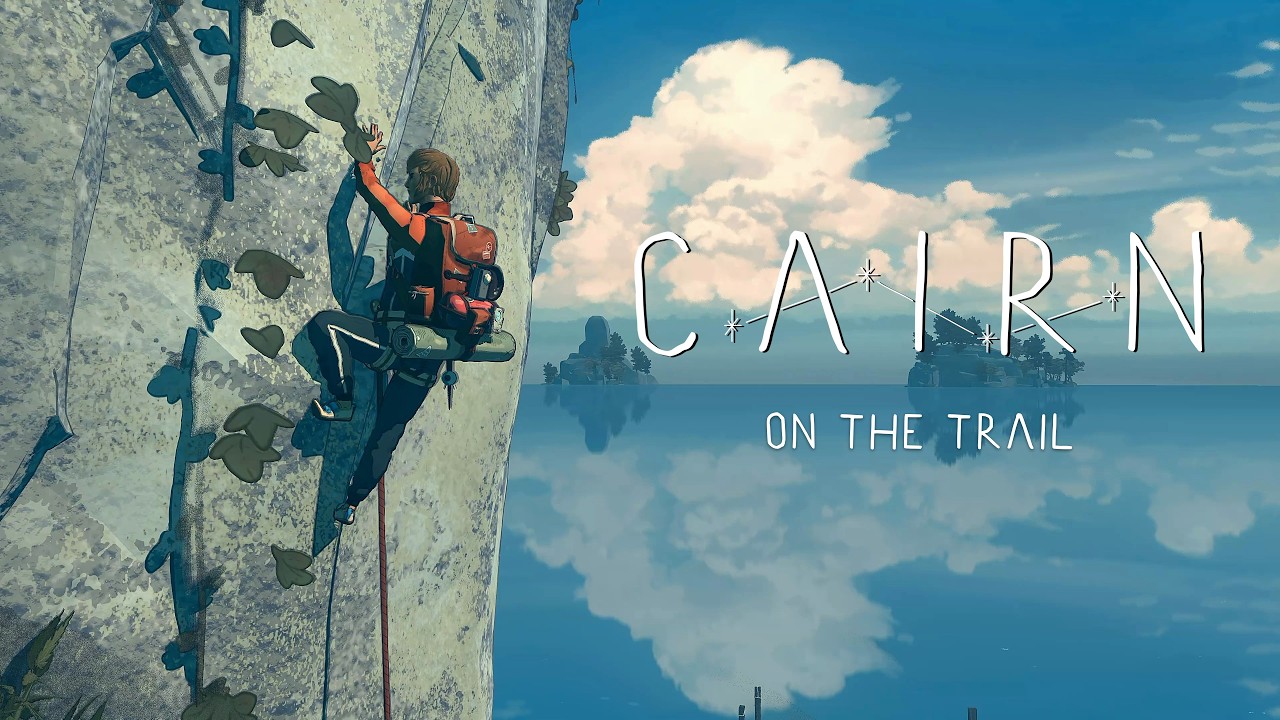
The Game Bakers’ Deep Water DLC adds a smaller-scale climbing challenge to Cairn: three new locations, a limited energy supply, Marco as a playable climber, and a Free Roam mode back on Mount Kami. The design shifts the focus from a single long ascent to deliberate route choices and practice.
A smaller climbing area changes the shape of the challenge
Cairn: On the Trail – Deep Water arrives as a free DLC on October 29, 2026. The Game Bakers says it adds three new locations with fresh climbing problems and discoveries. These areas are smaller than Mount Kami, so the team is adding a limited energy supply that players must manage while completing a climb. That one rule gives the expansion a different rhythm from the main ascent.
A compact route can still feel demanding when each move uses energy and mistakes make the climber tired. The challenge becomes less about simply reaching the top and more about deciding which route offers a sensible balance of effort and risk. A handhold that looks direct may not be the best choice if it drains too much strength or leaves you with little room to correct a mistake.
The developer has not presented the energy system as a simple countdown. Its announcement frames effort and mistakes as causes of fatigue, and encourages players to choose gear and routes carefully. That makes resource awareness part of the physical climbing fantasy. You are not just finding the next hold; you are thinking about the condition in which your climber will reach it.
Energy turns route selection into the main feature
In a climbing game, a route is already a sequence of decisions about handholds, footholds, and body position. Deep Water adds a limited energy budget to that sequence. Each unnecessary correction can matter because fatigue is tied to effort and mistakes. The most interesting question is not only whether a route is technically possible, but whether it is a good use of the climber’s remaining strength.
That gives the smaller locations a different kind of tension from a huge mountain. A large expedition can build drama through distance and preparation. A short crag can concentrate that pressure into a compact puzzle where every choice has a visible consequence. The player can study a wall, compare possible lines, and decide whether a safer-looking path is worth the extra movement.
This design also rewards observation. Before committing, look for a route that keeps the climber in balance and avoids avoidable corrections. If you make a mistake, notice what caused it rather than rushing to repeat the same move. The developer’s announcement does not publish exact energy values, so there is no reason to invent a universal best route. The fun is in reading the wall and learning what works for your own climb.
Marco makes familiar walls feel different
Deep Water also introduces Marco as a playable climber. The Game Bakers describes him as shorter and less flexible than Aava, but with greater reach, strong arms, and a newer Climbot model. Those differences suggest that the same wall may ask for a new approach depending on who is climbing it. Familiarity with Aava’s movement may help, but it should not replace paying attention to Marco’s own body and tools.
A climber’s proportions can change which holds feel accessible and how a movement sequence flows. Longer reach might make one gap easier, while reduced flexibility may make another posture less comfortable. That creates variety through character embodiment rather than only through new scenery. The route is not just a static puzzle; it meets a different body with different strengths.
The best way to learn Marco is to take time on an approachable wall before pushing into a difficult route. Notice where his reach helps, where a position feels awkward, and how the Climbot model supports movement. These are player-facing observations to test, not claims about hidden stats. The studio’s announcement emphasizes that his climbing style can challenge experienced players, so even veteran climbers have a reason to reset their assumptions.
Three locations create different kinds of practice
The DLC adds the cliffs of Haken and Ruka, with overhangs above water, and the Lamu climbing gym as a safer place to test skills. The locations have different jobs. Water-side cliffs create an unusual setting for a risky climb, while the gym offers a controlled place to get familiar with the mechanics and movement. That variety gives players a way to choose the kind of challenge they want.
The Game Bakers says the water provides a safety net: falling into it has no consequences in those areas. That can make experimentation less punishing, even while the energy limit keeps route decisions meaningful. A fall can still teach you where the line went wrong without necessarily ending the attempt in the same way as a severe mountain mistake.
A climbing gym is useful for more than beginners. Experienced players may use it to warm up with Marco, test movement options, or understand the energy rules before entering a more exposed climb. A dedicated practice area can make experimentation feel intentional rather than like a detour. The DLC therefore supports different confidence levels without pretending every player wants the same risk profile.
Free Roam turns Mount Kami into a place to revisit
Alongside Deep Water, a free update adds Free Roam mode on Mount Kami. Players can return to the mountain as either Aava or Marco and explore its paths. The Game Bakers presents this as an opportunity to explore every route, and it changes how the original mountain can be used after the main climb is complete.
Free Roam can serve as a low-pressure way to revisit a favorite section or practice movement away from the stakes of a full expedition. If you want to test a route or see how Marco handles a familiar ledge, you can use the mode as a place to learn. It makes a large environment valuable even after the first ascent, rather than treating the summit as the only reason to return.
This feature also supports curiosity. Mount Kami may contain paths players hurried past during the original climb, and a dedicated mode gives them a reason to look again. The official announcement says it allows exploration of every path, but does not specify every mode rule or save interaction. Check the in-game menu for current options and do not assume Free Roam changes the main campaign’s progression.
Preparation matters because the climb is a sequence, not a sprint
The Deep Water announcement specifically calls out choosing gear and route carefully. That makes preparation part of the intended experience. Before beginning, take a moment to understand what equipment is available and how it affects your approach. A route that looks manageable may feel different with a climber whose strengths do not match the holds or angles in front of them.
When you fail, treat the attempt as information. Was the route too demanding for the energy you had? Did repeated corrections create fatigue? Was there a safer line nearby? Those questions can guide a new attempt without turning the game into a spreadsheet. The goal is to make climbing decisions feel embodied and readable, not to calculate a perfect route before touching the wall.
Because the game centers on movement and risk, give yourself time to observe. Pause at a stable position if the route permits it, scan for the next useful hold, and avoid making several uncertain moves in a row. The exact controls and resource presentation are best learned from Cairn’s tutorials and interface. These broad habits follow from the official feature description without claiming a developer-approved route solution.
Why this free update could bring climbers back
Deep Water offers a different kind of challenge for players who already know the scale of Mount Kami. The smaller locations, limited energy, and new playable character invite them to revisit familiar climbing skills under new constraints. Free Roam adds another reason to explore the existing mountain, while the Lamu gym provides a quieter place to practice.
New players can also use the update as an entry point, but they should approach it as an expansion of Cairn’s climbing ideas rather than a separate game. Learning basic movement and equipment through the original experience may make the new locations easier to understand. The available route depends on the current game menu and platform, so check the official store and in-game update notes for access details.
The strongest feature here is the way the DLC changes the question the player asks. Instead of only wondering how to reach the summit, you think about energy, body type, route choice, and when a practice space is useful. Deep Water gives Cairn more variety while preserving its focus on deliberate movement. For a game about climbing, making the route itself more interesting is a pretty fitting way to expand the mountain.
CHECK THE ORIGINALS.
Facts and update details above are based on these official sources. Details can change as the game is updated.
- Cairn’s DLC is coming out October 29th! ↗The Game Bakers
- Cairn’s On the Trail DLC launch announcement ↗The Game Bakers
- Cairn on Steam ↗The Game Bakers / Steam
Loading comments…