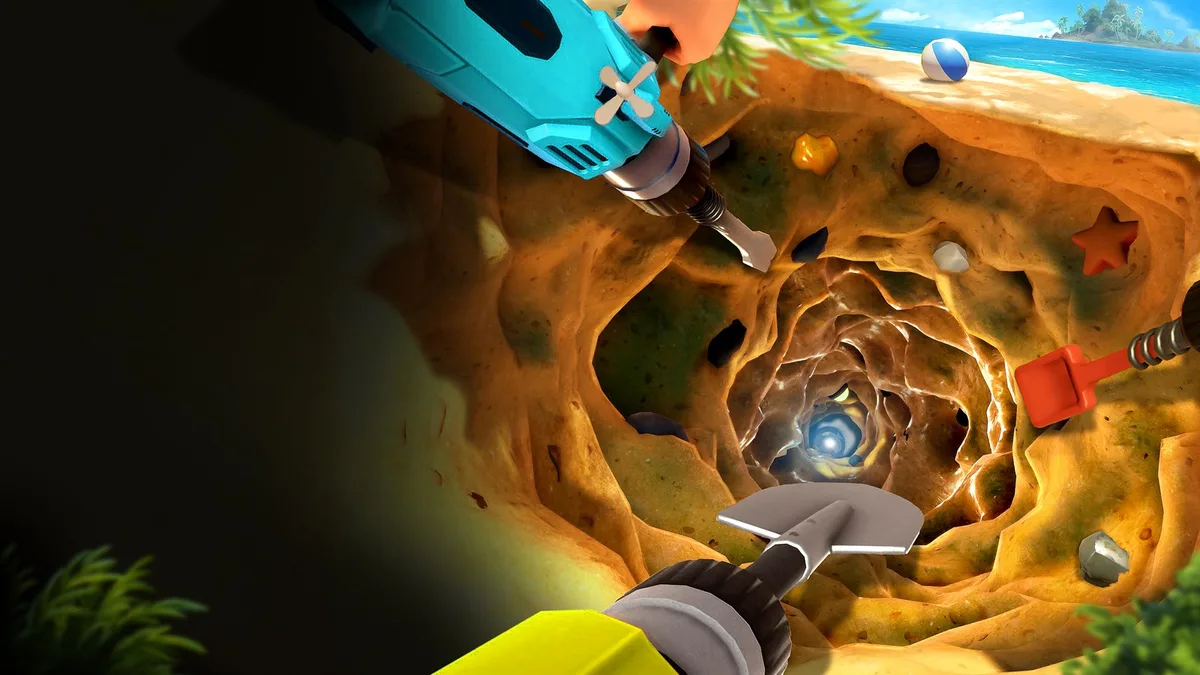
The follow-up to A Game About Digging a Hole keeps its simple dig-sell-upgrade loop, then lets a small group decide how to turn one hole into a shared adventure.
The whole pitch still fits in one sentence
A Game About Digging a Hole Together asks players to dig into a beach, collect resources, sell what they find, upgrade equipment and keep going toward a promised treasure. The publisher's Xbox description says the follow-up preserves the minimalist formula of the original while adding more time to dig and the ability to share the job. The ID@Xbox showcase lists a December 4, 2026 release for Xbox Series X|S, Xbox on PC and Game Pass.
That plain description is the appeal. A co-op game does not always need a sprawling skill tree or a dramatic world-saving plot. A small shared task can create its own conversation: which wall should we clear, who returns to sell materials, and whether the next upgrade is worth another trip down? The game gives the group a visible project, and each session can end with a hole that looks different from when it began.
The Xbox Store lists online co-op for two to four players and also a single-player option. It does not require that you recruit a full team to experience the core loop. This feature looks at the confirmed design rather than inventing late-game secrets. The promise is a bigger, shared excavation. What waits at the bottom is better left for players to discover.
- December 4, 2026 on Xbox and Xbox PC
- Game Pass launch announced
- Online co-op for two to four, plus solo play
Dig, sell, upgrade, repeat
The original game's strength was how quickly its purpose became clear. The sequel's store page repeats the same progression: dig, find resources, sell, buy better equipment and dig farther. Each action feeds the next. The loop is easy to understand even when a new player joins after someone else has already begun. That accessibility is important in co-op, where complicated onboarding can stop the group before the fun starts.
Selling what you find gives the hole a practical rhythm. A player can push deeper for a potentially valuable discovery or return with a safer haul. Upgrades change how efficiently the team works, making a familiar patch of ground feel different after a purchase. The official description does not publish a complete equipment list or exact economy values, so it would be misleading to promise a particular best upgrade at launch.
A good way to begin is to agree on a small goal: clear a route to one visible resource, then return and see what you can afford. After that, let the group decide whether to split the work or stay together. Even a simple task can generate tension when everyone wants to spend the next bit of currency differently. That low-stakes debate is part of the pleasure of a cooperative sandbox.
One hole, several ideas about where to go
Two to four players can dig together online according to the Xbox capabilities list. That changes the shape of the task. A solo player creates a route according to one plan. A group may turn left and right at once, make a broad staircase or send one person down while another sorts resources. None of those strategies is confirmed as optimal; they are natural possibilities when several people can work on the same excavation.
The useful design question is whether the game keeps everyone involved. A shared project works when players can see progress and make meaningful contributions even if one friend is faster or has better equipment. The publisher promises the ability to dig together, but it does not explain every shared-resource or progression rule in the short store description. Check the final game before assuming inventories and upgrades are pooled in a particular way.
If your group tends to over-plan, try a first session with only one rule: tell each other before you block a route or spend a major resource. Leave room for surprises. The beach setting and simple objective invite playful detours, and a slightly messy hole may be more memorable than a perfectly efficient tunnel. Co-op often succeeds because it lets a practical plan collide with the personalities of the people carrying it out.
The sequel still leaves room for one player
The Xbox listing includes single-player support. That is important because a sequel with 'Together' in its title could look inaccessible to someone who prefers quiet play or cannot coordinate a schedule. The publisher explicitly says the core digging loop remains available alone. You can still gather materials, sell them and push deeper toward the promised treasure at your own pace.
Solo play may feel different because every return trip and upgrade decision belongs to you. A co-op group can divide attention, while a solo player notices each small improvement in efficiency more directly. That can be satisfying for people who like a calm progression game. The official listing does not say whether the game scales resource requirements or terrain for different player counts, so avoid claiming the solo route is faster or slower without evidence.
If you are unsure which mode fits, start alone for a short session and learn the equipment. Then invite friends if you want a more social version of the same task. The entry point remains simple enough to explain in a sentence. The title promises company, but the store page makes clear that company is an option rather than a gate in front of the basic idea.
What the release announcement actually confirms
The October ID@Xbox showcase says the game is headed to Xbox Series X|S, Xbox on PC and Game Pass on December 4, 2026. The Xbox Store lists Xbox Play Anywhere, online co-op for two to four and Xbox cross-platform multiplayer. These are useful platform details, but they should not be stretched into a promise that every other storefront will share the same online rules. Check the version you plan to buy.
The store also notes that online multiplayer on console requires an eligible Game Pass subscription, sold separately. If your group plans to play on different devices, verify the current Xbox listing before launch and make sure everyone understands the account requirements. A social game is least fun when the first session ends at a subscription screen that nobody expected.
The published description keeps the game's secrets intentionally vague. It promises a treasure somewhere beneath the beach, not a detailed plot synopsis. That restraint fits the design. The journey down is the attraction, and discovering what is below should be part of play. For a feature article, the honest approach is to explain the loop, the player count and the release window while leaving hidden content hidden.
A small game can make a large evening
A Game About Digging a Hole Together has a clear reason to exist: it adds other people to a simple task that already invited the thought, 'What if we tried this together?' The confirmed design keeps the dig-sell-upgrade cycle and expands it into an online co-op project. Solo support means the original mood is still available when you want to work quietly.
Its success will depend on feel: how satisfying it is to remove earth, how clearly upgrades change the work, and whether a group can keep building toward a shared goal. Those are questions the December release will answer better than a trailer. The official sources give a reliable outline, not proof that every session will be equally surprising. That distinction matters when a charming premise travels quickly online.
If you have a small group looking for a low-pressure game, put the December 4 launch on your calendar and compare platform details before buying. Give the first session a modest goal and see where the digging takes you. The funniest story may not be the treasure at the end. It may be the strange route your friends chose because one of them was absolutely sure the best way down was sideways.
CHECK THE ORIGINALS.
Facts and update details above are based on these official sources. Details can change as the game is updated.
- A Game About Digging a Hole Together Store Page ↗rokaplay via Xbox Store
- ID@Xbox and IGN Showcase Recap ↗Xbox Wire
Loading comments…