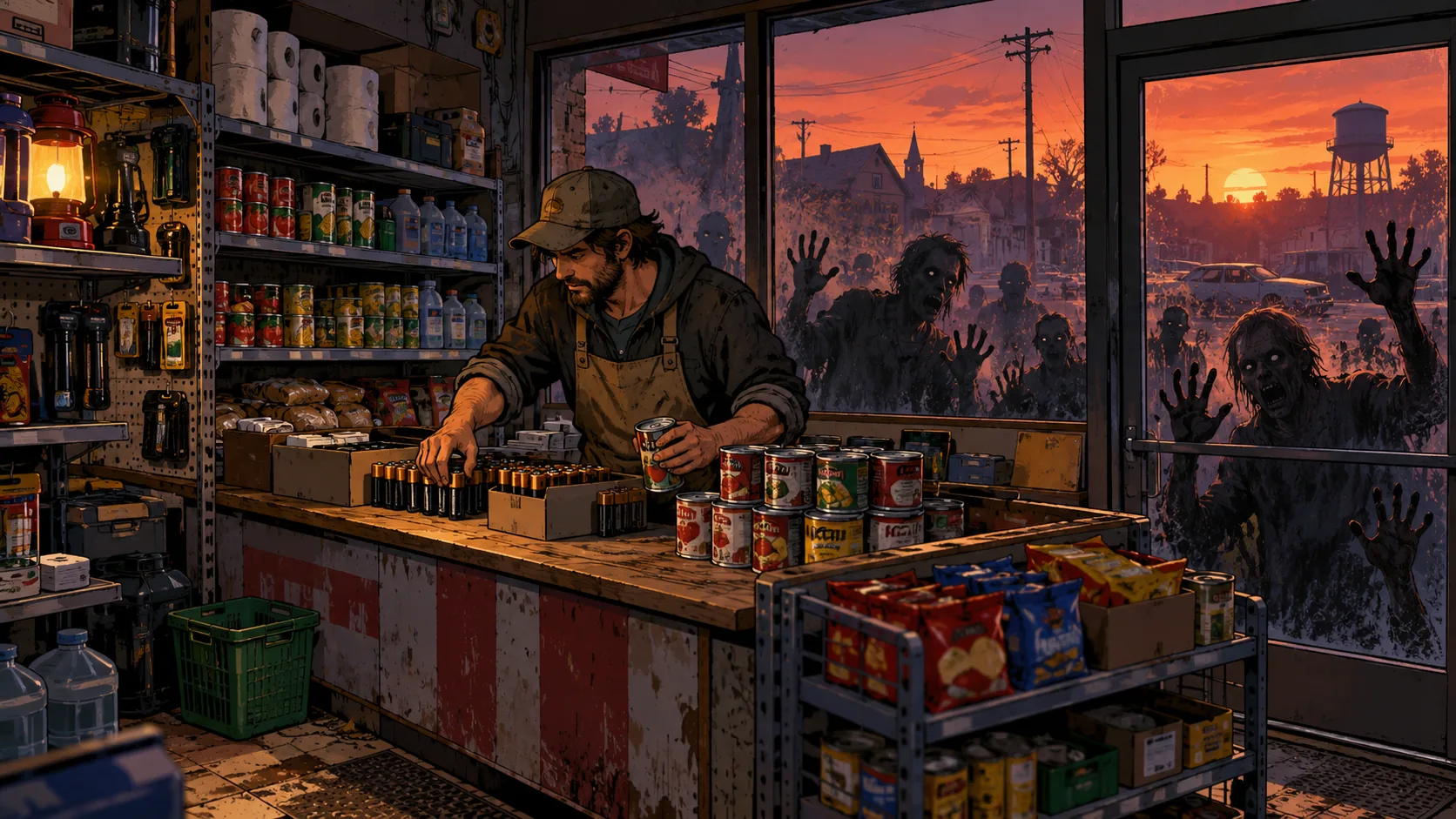
Running a shop after the apocalypse means customers and zombies both want your attention. This guide makes the first week easier to plan without claiming a secret perfect build.
The first rule is to keep a useful shop
The Walking Trade arrived on Xbox Series X|S on October 26, 2026. Solo developer Adam Carmichael describes it as a store management game inside a zombie apocalypse: arrange shelves, stock goods, set prices, serve survivors, and fight when a horde reaches the building. The game asks you to manage a business and a defensive position at the same time. A profitable display is no help if everyone is overrun before the next customer arrives.
This beginner guide is based on Carmichael's Xbox Wire explanation and the official store description linked there. It offers a planning method, not a promise that one exact layout or price will beat every run. The public material confirms systems such as staff roles, crafting, raids, and reputation. It does not provide a complete table of values, so we will focus on decisions a new shopkeeper can actually observe and repeat.
- 🛒 Keep essential goods easy to restock.
- 🧟 Plan a response before a horde appears.
- 👥 Give each survivor a clear job.
Build the store around two kinds of traffic
Customers need to find items and reach a place to pay. You and your staff need to restock shelves and move during a raid. The developer says you can design the store layout and choose what goes on each shelf. That freedom makes layout a gameplay decision. A beautiful store with narrow, awkward routes can become a problem when a frightened worker or an armed defender has to cross it quickly.
Start with a simple floor plan you can understand at a glance. Keep the stock you handle most often accessible, and avoid turning every corner into a maze. That is general planning advice rather than a claim that the game has a specific pathfinding penalty for each object. Once you see how shoppers and staff actually move, change one area at a time. A small adjustment is easier to evaluate than a full rebuild after every busy day.
A shop is also a defensive space. The official description says you can later build barricades, storage, and makeshift traps. Leave room for those possibilities when you design the first shelves. You do not need to build a fortress before the first sale, but you should know which entrance you would protect and where you would move if zombies came through the window.
Stock for demand without trapping your money
The Walking Trade lets you choose prices and decide what goods fill your shelves. Batteries and other survival supplies are part of its store fantasy. A new player may be tempted to buy everything or raise every price immediately. A safer first-week approach is to stock a manageable range, watch which shelves empty, and use that information for the next order. Keep enough room in your budget for repairs, staff, and defensive needs.
Carmichael says the game was inspired by the feeling of starting from nothing in tycoon games without cheat codes. That is why the early economic loop matters. Every restock decision should help the next day rather than merely make the shelves look full. If a product sits untouched, ask whether its placement, price, or the type of visitors is the issue. The public overview does not provide exact demand curves, so observe your own store instead of trusting a universal price chart.
Do not confuse a high listed price with a healthy business. The official description says reputation affects who comes knocking, and the game permits both helpful trade and exploitation. A short-term gain can have a longer-term consequence in a system built around community response. Decide what kind of shopkeeper you want to be, then make the pricing and staff choices consistent with that goal.
The second day introduces a person, not just a worker slot
The developer says a survivor named Robin reaches the shop on the second day while fleeing a zombie. He becomes the first staff member, and his arrival introduces combat and team management. That is a useful moment to slow down. A new worker is more than extra throughput: they create another person to equip, motivate, and protect. Learn what the game asks of Robin before assigning every possible job at once.
Carmichael says players he watched after the PC launch tried hard to keep Robin alive through their playthroughs. That anecdote is not a gameplay rule, but it explains why a management system can feel personal. When a worker has a name and a story, a careless decision may sting more than losing a generic unit. Use that feeling as a reason to plan exits and defenses, not as a reason to avoid every risk.
The official post notes that Robin shares a name with the developer's son. That background is an interesting design detail, but the player's task remains practical: understand the team system, check a worker's equipment, and avoid stretching a small staff across too many simultaneous jobs. The first week is a learning period, not a race to employ everyone in town.
Assign jobs around the bottleneck
Survivors can serve customers, scavenge supplies, or stand guard, according to the developer. They need equipment and motivation. That creates a simple management question: what is currently slowing the shop down? If customers wait while you run between shelves, a service role may help. If stock runs low, scavenging may matter more. If raids repeatedly break your rhythm, a guard may be the sensible next assignment.
No single staff mix is automatically best. The game includes commercial work and sudden combat, so the bottleneck can change across a day. Review it after a raid or a busy rush. Did a customer wait too long? Did defenders have no supplies? Did you lose time because every worker was assigned to the same task? Adjust one role and see what improves. That is more reliable than adding workers without a plan.
Keep an eye on the cost of keeping people effective. The official overview explicitly says survivors should be equipped and motivated. It does not specify a universal minimum gear level or morale formula. A good rule is to avoid assuming a staff member can handle a dangerous job simply because the job menu allows the assignment. Preparation and role clarity are part of the survival economy.
Turn raids into a prepared routine
Zombies periodically attack the store. Carmichael says players can use melee weapons, firearms, or whatever is available to defend it, and later craft defenses and traps. A first raid is likely to feel chaotic because it interrupts a shop-management mindset. Before it happens, decide where you will stand, where the workers should move, and which resources you are willing to spend to keep the building intact.
A good defensive routine begins before the alarm. Leave yourself a path through the store, keep useful equipment close enough to reach, and know which part of the layout is most exposed. These are general survival tactics, not confirmed AI exploits or an exact horde schedule. The developer's description establishes that raids recur, so preparation is a real part of the intended loop.
After a raid, inspect the shop before reopening the economic plan. Repair what matters, replenish supplies, and ask whether the layout helped or hindered you. A trap that looks clever but blocks your own movement may not be worth the space. The goal is a business that can recover from an attack, not a building that survives one perfect fight and collapses the next morning.
Crafting should solve a specific problem
The crafting station unlocks the ability to make medicine, weapons, tools, shop upgrades, defenses, and traps. That list is broad enough to tempt a new player into making one of everything. Instead, identify the pressure that nearly ended your last day. Was it a lack of healing, weak combat options, slow stocking, or a vulnerable entrance? Craft for that problem first, then observe whether the next day improves.
The store description also mentions storage units and barricades. Their value depends on your layout and play style. A larger stock area can help if goods run out, while a barricade can buy time during an attack. We are not assigning invented resource costs or exact numerical bonuses; check the live crafting screen for current recipes and values. The principle is simply to connect each build decision to a visible need.
Crafting can also support the moral direction of the shop. A player trying to help survivors may prioritize reliable supply and defense. An opportunistic shopkeeper might make different choices, but the reputation system means those choices can echo outside the store. The game gives room for both. Your first week should teach you which kind of risk you enjoy managing.
A first-week plan that leaves room for surprises
The Walking Trade works when the shop and the apocalypse are treated as one system. Design a clear floor, stock a few useful goods, watch how customers respond, give staff specific jobs, and prepare for raids before they happen. Those steps come from the game's confirmed systems, while the precise order is an editorial beginner plan. You can adapt it to your own store without chasing a supposed universal build.
When a week goes badly, do not assume the answer is simply a bigger gun or higher prices. Look for the bottleneck that connected business and survival. Maybe the shelves emptied before the raid, or the guard was busy while a customer blocked the route. Fix one link, try again, and let the store become a place worth defending.
CHECK THE ORIGINALS.
Facts and update details above are based on these official sources. Details can change as the game is updated.
- The Walking Trade: How I Built a Shop Simulator Without Ever Playing One ↗Xbox Wire / Microwave Games
Loading comments…