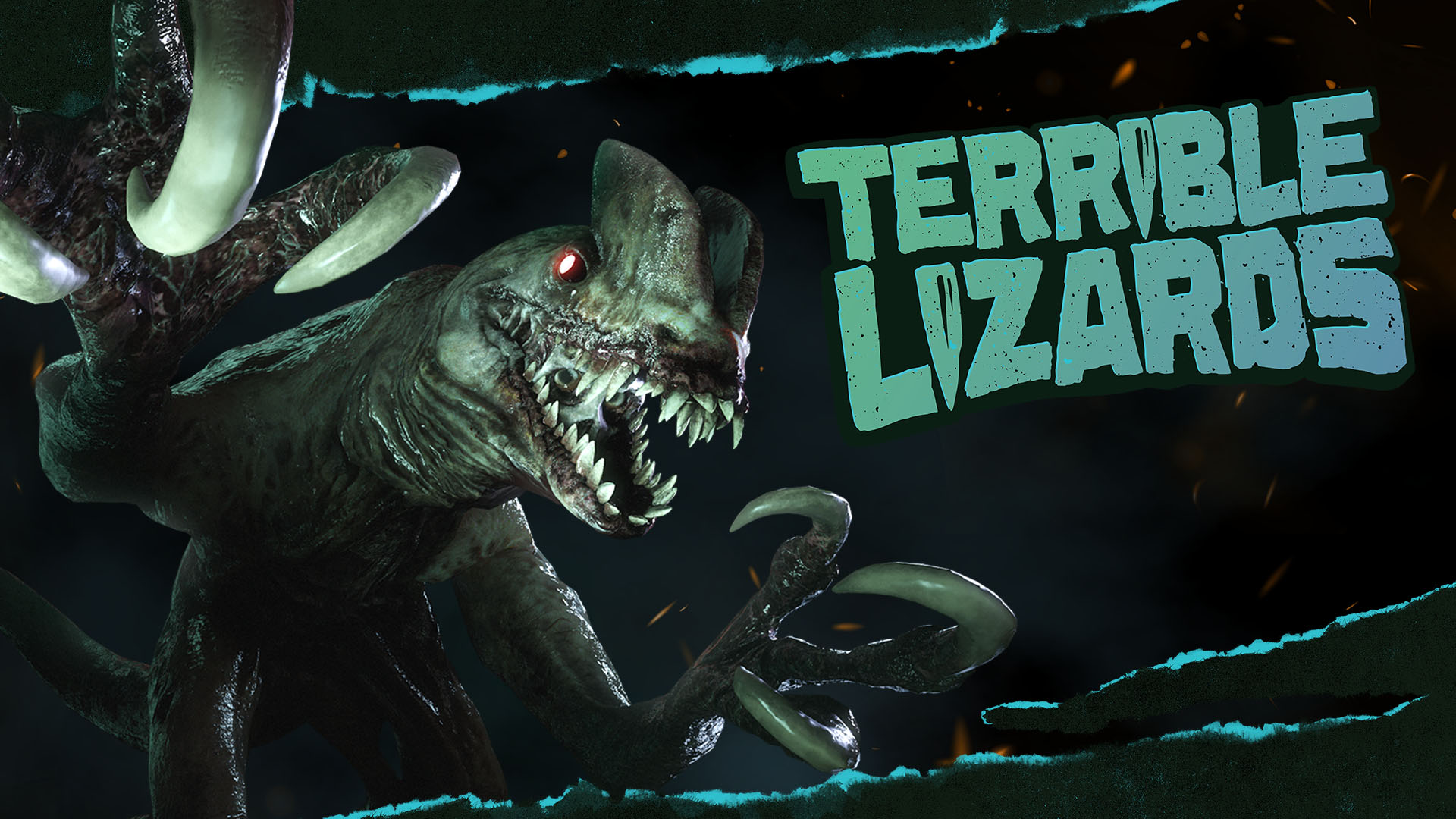
Terrible Lizards asks you to survive with movement, not weapons. This first-session plan turns its published mechanics into readable route decisions.
Start with the rule that changes everything
Terrible Lizards gives you no weapons. At Dalton's Dinos, the abandoned dinosaur attraction where the game is set, movement is your means of survival. Xbox's official description names running, jumping, climbing, wall running, bouncing, and sliding. Game director John Gelardi describes a design built around reactive flow rather than stopping to plan every jump. This guide turns those confirmed mechanics into a first-session decision process.
Our core advice is to identify the next safe move before you sprint. A route is more useful than raw speed if an animatronic cuts across your path. Look for a reachable ledge, a clear landing, and a second option beyond it. You do not need to memorize an entire level immediately. You need enough information to avoid reaching a dead end at full momentum.
We have not documented a hands-on run of this build. The specific route plan below is editorial guidance derived from the published mechanics, not a claim that we beat a particular chase or found a secret shortcut. Treat each step as something to check against your own game version and difficulty.
- See one move ahead: identify the next ledge, gap, or slide opening.
- Keep a backup path: avoid routes that end in a single blind corner.
- Build flow: connect a jump to a climb or wall run instead of stopping.
- Slow down for story items only when the area gives you room to leave.
- After a failed chase, change one decision instead of repeating the same sprint.
Read the environment before the creature appears
A horror chase feels urgent because you have little time to inspect geometry once it starts. The calmer moments are therefore part of the movement game. As you enter a new space, notice broad surfaces that can support a wall run, objects that look climbable, and low openings that may reward a slide. A route with two connected moves is better than a beautiful jump that leaves you facing a wall.
Do not assume every piece of scenery is interactive. The official material lists movement abilities, but it does not publish a map of every usable surface. Test a route while there is space to recover. If a ledge refuses to catch you, remember that boundary for the next attempt. Consistent observations are more useful than rushing to label a failed input as a bug.
The 1992 setting adds a practical story pressure. Your car is stranded, the staff are missing, and a phone voice asks you to find a child. The description also mentions tapes, notes, and recordings. These invite exploration, but collecting every item the moment you see it may put you into a bad position. We would separate a first pass for survival from a return pass for details where the game allows it.
A player who explores with an exit in mind is not playing timidly. They are spending quiet time to buy a better response later. This is the main information gain behind our guide: the movement system is also a scouting system. A ledge you inspect before danger can become the recovery path that keeps a later chase alive.
Chain movement without turning every chase into a blind sprint
Gelardi says responsive rhythm informed Terrible Lizards. That suggests the strongest play should feel like a sequence rather than isolated button presses. Run toward a clear opening, jump with a landing in view, then transition into the next move. A wall run or slide is valuable only if it points you toward more usable space. Speed that carries you into an unknown corner is a liability.
The player-facing version is simple: try to leave each movement action with a visible continuation. Before a jump, ask what you will do when you land. Before a slide, ask whether the exit is open. Before a wall run, identify where you are going to release. These questions take seconds in a calm space and become instinctive with practice.
If a chase goes badly, do not always try to regain maximum speed. First recover a readable line. You may need a shorter jump or a safer climb before committing to a fast chain again. The official sources do not provide exact stamina, animation-cancel, or enemy-speed numbers, so we will not invent a perfect timing chart. Your own input feedback should decide the pace.
This approach also makes the no-weapons rule fairer to process. You cannot solve a missed route by dealing more damage. You can change where you run and how early you commit. In that sense, route quality is your real loadout. The player who knows a second path has more options than the player who memorized one fast sequence.
Use a failed attempt as route data
A failed chase can teach one of three things: the route was blocked, the input did not behave as expected, or the decision came too late. Try to name which one happened before restarting. If you repeatedly hit the same obstacle, find an alternate lane. If a climb works in calm conditions but fails under pressure, practice the approach angle. If the animatronic catches you before the first move, begin the escape earlier.
Avoid changing everything at once. When a player swaps the route, speed, camera angle, and jump timing together, the next attempt gives little information. Changing one variable makes the result easier to read. This is a practical testing method, not a hidden game rule. It is useful precisely because the official materials describe the available moves without promising a single intended path through every encounter.
You can also keep a small mental map of recovery points. A wide platform may let you reset your camera; a narrow corridor may force a committed slide. Those are general movement-game principles, and individual spaces in Terrible Lizards may behave differently. The aim is to notice what a location allows before a creature closes in.
If you record a clip, review the moment when the route stopped being clear, not only the final hit. The mistake often occurred earlier, when you entered a lane with no exit or ignored a reachable ledge. That kind of review gives a player a better next attempt than simply reacting faster.
What the movement-first design means for the horror meta
Terrible Lizards is not a competitive shooter with a weapon tier list. Its practical meta is route knowledge: which movement chains are reliable, how early you spot them, and how much information you gather while exploring. The official post supports the movement-first premise. It does not publish a ranked list of fastest paths, and we cannot responsibly invent one without measured play.
The unusual value of this design is that player skill is visible without combat. A clean escape can come from reading a room well, not from collecting a rare item. That gives discussion a better question than “what is the best gun?” Players can compare how they survived the same space, which line offered a backup, and where they lost momentum.
For newcomers, this also changes what to practice first. Spend a few minutes on control consistency rather than sprinting straight toward story progress. Learn what a successful wall run feels like, how far a jump carries you, and whether a slide preserves your direction. The game must teach those interactions, but deliberate practice can help make them usable under stress.
Our expectation is that the most satisfying runs will balance speed and readability. That is an inference, not a review score. A player who values slow stealth may prefer a different horror rhythm; one who likes precise platforming may find the chase itself rewarding. The official Xbox listing is the source for access and mechanics, while only your own session can answer whether that rhythm works for you.
A first-session checklist you can actually use
When you start, check the current control layout and move through one calm area while naming possible exits. Find a jump-to-climb connection and a low opening that looks suitable for a slide. If an item asks you to stop, look behind you before interacting. During the first chase, prioritize a clear route over a collectible. Afterward, note where your planned line failed.
The official Xbox roundup lists the game for cloud, Series X|S, and PC through Game Pass, but current access can vary by account and region. If you switch devices, do not assume the same input feel or settings. Recheck controls and performance on the platform you are actually using. That small reset prevents a platform difference from masquerading as a movement mistake.
This guide is strongest when treated as a framework, not a universal walkthrough. It does not claim a specific monster pattern, secret room, or guaranteed safe route. Use the published abilities to test your environment, then make your own map of dependable moves. If you can explain where your next two actions lead, you are already playing with more information than a blind sprint provides.
CHECK THE ORIGINALS.
Facts and update details above are based on these official sources. Details can change as the game is updated.
- Terrible Lizards: Movement Is Your Weapon ↗Xbox Wire / Digital Pajamas
- October Game Pass Wave 2 ↗Xbox Wire
Loading comments…