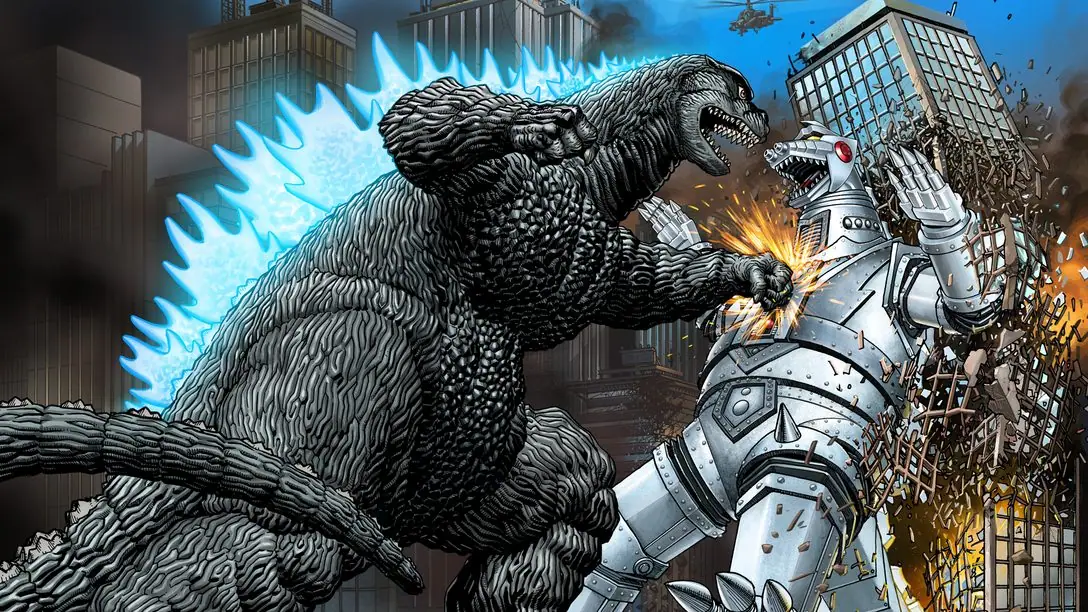
Godzilla's remastered arena fighter has 12 kaiju with different strengths. This source-backed beginner guide helps you choose a fighter, read energy use and practice without inventing a tier list.
Start with one balanced kaiju, then switch based on what you struggle with
Heisei Godzilla is the cleanest first pick in Godzilla: Destroy All Monsters Melee Remastered. The official PlayStation Blog fighter rundown calls him the balanced default, with high starting health, useful close attacks and an accessible style. Atari confirms 12 playable monsters, each with a distinct mix of melee attacks, energy blasts and Rage Mode strikes. The game released on November 3, 2026, according to its Steam listing.
That does not mean Godzilla is the strongest fighter. He has a slow-charging high-energy pulse and sluggish projectiles, according to the fighter guide. A player who enjoys movement may learn faster with Godzilla 2000 or Rodan; someone who wants to control distance may prefer King Ghidorah. We would choose by the decision you want to practice rather than copy a day-one tier list.
We have not run a hands-on matchup test. This plan uses published character descriptions to help you judge your own matches. For exact inputs, use the current in-game controls.
- First match: choose Heisei Godzilla to learn movement, blocking and the arena.
- Second match: change only one thing, such as distance or energy use.
- Third match: try a specialist that addresses the problem you noticed.
- Afterward: pick the kaiju whose weakness you understand, not only the one who won once.
Which of the 12 kaiju fits your preferred fighting style?
The official fighter guide describes every monster by a useful role. Rather than burying those differences in twelve long biographies, we grouped its descriptions by the first decision you are likely to make in a match. This is a learning map, not a competitive ranking; the guide does not publish a matchup matrix or universal best character.
Begin with a role you can explain in one sentence. 'I want to close distance' is actionable. 'I heard this kaiju is S-tier' is not, especially when you do not yet know whether the claim applies to your platform or current patch. Test one role for several matches before changing characters whenever you lose.
- Balanced start — Heisei Godzilla: health and all-round tools; watch the slow pulse charge.
- Balanced but quicker — Godzilla 2000: more speed, somewhat less strength.
- Range control — King Ghidorah: projectiles and airborne pressure; weak close fighting and energy-limited flight.
- Counter and grapple — Anguirus: defensive spines and solid grabs; little long-range threat.
- Hit and run — Megalon: burrow movement and surprise grabs; below-average durability.
- Fast aggression — Gigan: teleportation and edged strikes; beware energy attacks.
- Speed first — Rodan: high air mobility and fast attacks; weakest defense in the roster.
- Heavy mid-range — Destoroyah: strong damage and energy attacks; costly abilities and slow movement.
- Ranged armor — Mechagodzilla: many weapons and defense; weak when energy runs low.
- Grapple reach — Orga: long arms and close control; costly goo and trouble catching quick foes.
- Hybrid weapons — Kiryu: more balanced than Mechagodzilla, but still energy hungry.
- Long-range grappler — Mecha-King Ghidorah: versatile grabs and ranged tools, with slow movement and energy costs.
A three-match plan that teaches more than a quick win
In match one, play Heisei Godzilla and focus on the distance where your attacks connect. Do not try to memorize every move at once. Notice whether you lose health while charging a pulse, whether a tail or claw works when an opponent closes in, and which buildings create cover or an object you can weaponize. Atari confirms interactive arenas, but it does not specify a universal best object in every location.
In match two, keep the same monster. Change only one behavior: perhaps stop firing slow projectiles at a moving target and work toward close range instead. When several choices change together, a win teaches little about which one helped. One deliberate adjustment makes a lost round useful evidence for your next attempt.
In match three, pick a specialist that solves a problem you actually observed. If you could not catch an opponent, try Rodan's mobility or Gigan's teleport. If you rushed into every counter, try King Ghidorah's range. If you ran out of energy, choose a fighter whose basic close tools can still function. These are experimental suggestions derived from the official character descriptions, not tested matchup guarantees.
After each round, note your distance, energy and one mistake. Repeated losses to one grab may call for a different response, not a new monster.
- Match 1 — Learn your basic range and inspect one usable arena object.
- Match 2 — Repeat the kaiju; alter one habit and compare the result.
- Match 3 — Choose a specialist for a specific problem, then evaluate its cost.
Energy is the hidden cost behind flashy kaiju picks
Several fighters in the PlayStation Blog rundown share a clear tradeoff. King Ghidorah's flight drains energy. Megalon's burrow consumes it. Destoroyah's strongest attacks use a great deal. Mechagodzilla relies on it for many weapons and flight, while Kiryu is also described as energy hungry. A character's signature move can therefore be excellent in a highlight clip yet unreliable if you spend every resource at the start of a fight.
Our practical rule is to separate essential movement from optional spectacle. Before you commit to a costly attack, ask what you will do if it misses. Can you still escape, block or contest a grab? If not, the move may be better saved for a moment when the opponent is committed to another action. The official sources do not provide exact costs or cooldowns, so we will not invent numbers.
This also explains why a seemingly simple fighter can teach useful fundamentals. Heisei Godzilla's basic claws and health give a beginner more opportunities to learn spacing. A specialist can outperform him once you understand when to pay an energy cost, but a specialist's weakness is harder to manage if you cannot yet read the opponent's range.
Use the city, but do not let destruction replace defense
Atari says the remaster has eight locations with day and night variations. Its product page describes buildings and landmarks as things players can use strategically and even throw. That makes arena awareness a real combat skill rather than decoration. If you keep losing track of an opponent while searching for a throwable object, however, the scenery has become a distraction.
A low-pressure experiment is to select one arena and repeat it while learning a monster. Notice where open space favors Rodan's speed, where obstacles interrupt a projectile line, and where a grappler can close distance. Those relationships are sensible hypotheses from the published movesets. We are not claiming fixed stage advantages or hidden map geometry without measuring them.
The improved unlock system lets players choose the order of monsters, locations and gallery items, according to Atari. If a kaiju's style interests you, unlock that fighter early rather than following an arbitrary completion order. The additional single-player campaigns listed on Steam also offer a way to learn character identity before jumping into an online lobby.
Local and online matches reward different learning habits
The remaster supports local play and new online multiplayer, with Versus and Melee modes named by Atari. Steam also lists single-player, online PvP and shared-screen options for its PC edition. Check the live page for your platform before assuming every mode or controller requirement is identical across PC, PS5, Xbox and Switch 2.
Local sessions are ideal for asking a friend what caught you. 'I could not reach Ghidorah' is a better discussion starter than 'Ghidorah is broken.' Online matches are more useful for seeing unfamiliar habits, but one connection or opponent is a poor basis for balance claims. Try several opponents before deciding a matchup is hopeless.
Try two rounds with the same kaiju, discuss one adjustment, then rematch. Switching after every loss makes it harder to see what improved.
What the remaster changes for returning players
The interesting competitive change may be access to more opponents, not just sharper visuals. Online multiplayer gives a local-era arena fighter a broader pool of styles. Atari's flexible unlock order lets players reach a preferred monster sooner. Together, those features could make matchup learning faster for active groups. That is an inference from the confirmed feature list, not measured data about the online population.
A 2002 veteran may bring strong memory of an old button layout or favorite monster. The new release is a good moment to check those assumptions against the actual current build. The PlayStation Blog guide describes roles and weaknesses, but it does not claim that every old technique behaves identically in the remaster. We would start with one familiar fighter, inspect the in-game control screen, and compare before teaching a newcomer a legacy trick.
For a newcomer, the shortest route is still Heisei Godzilla, one repeated arena and three deliberate matches. Then test Rodan, Gigan, Ghidorah or another specialist according to what you found difficult. The game is out now on the platforms listed by its stores, but an honest guide can offer a strong practice method without pretending we have already solved a live competitive meta.
FAQ
Which monster should beginners pick in Godzilla Remastered?
The official PlayStation Blog fighter guide describes Heisei Godzilla as a balanced default with high starting health, making him a sensible first fighter. Godzilla 2000 is a slightly faster alternative.
Is Rodan a good beginner monster?
Rodan is described as the fastest and very mobile in the air, but also as having the weakest defense. He suits players comfortable with hit-and-run movement rather than repeated close trades.
Does the remaster have online multiplayer?
Yes. Atari and Steam list new online multiplayer alongside local play. Confirm your platform's current modes and network requirements on its live store page.
CHECK THE ORIGINALS.
Facts and update details above are based on these official sources. Details can change as the game is updated.
- Godzilla: Destroy All Monsters Melee Remastered fighter guide ↗PlayStation Blog
- Godzilla: Destroy All Monsters Melee Remastered product page ↗Atari
- Godzilla: Destroy All Monsters Melee Remastered on Steam ↗Atari / Pipeworks Studios / Steam
Loading comments…