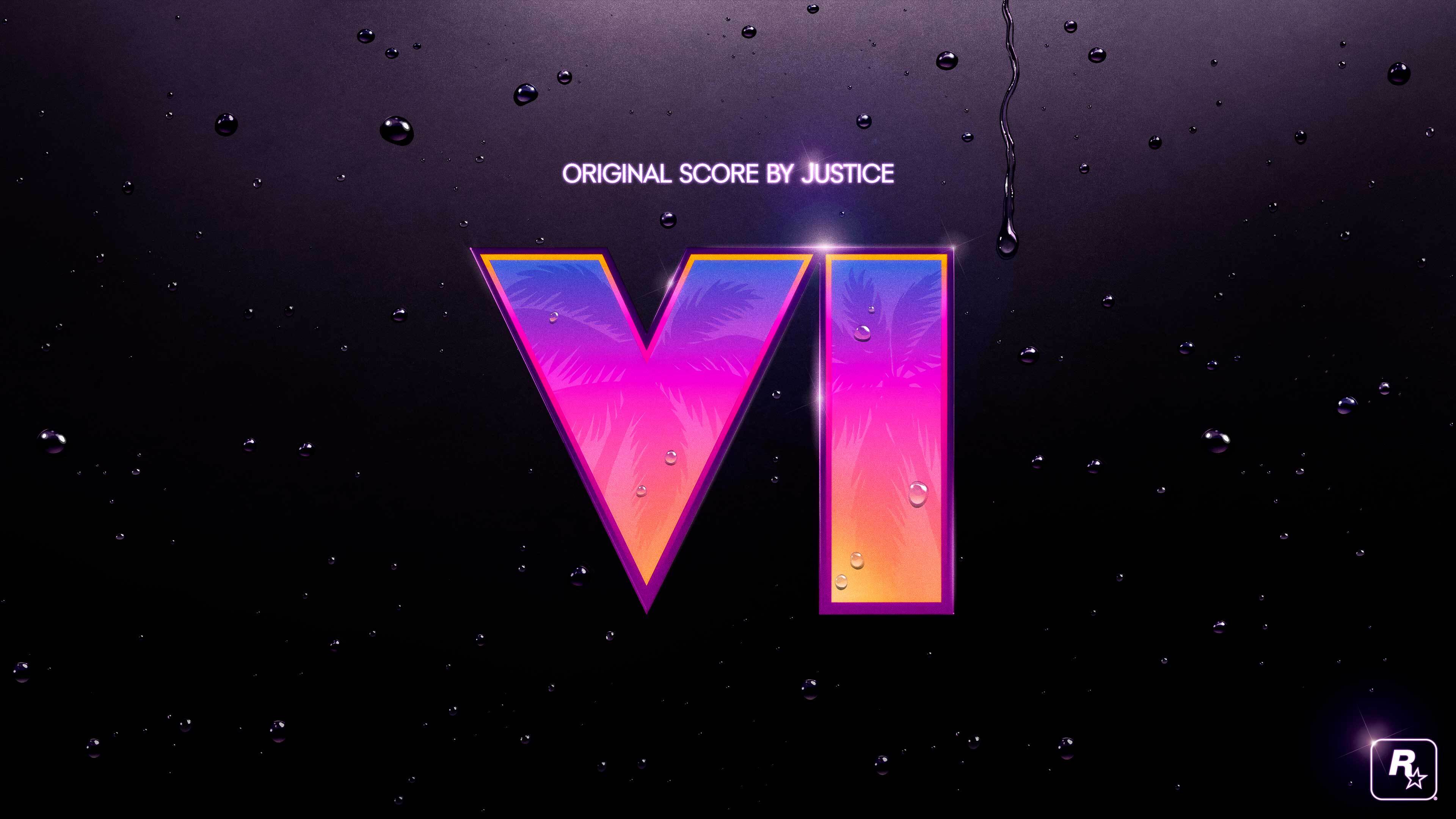
Rockstar has named French duo Justice as the composers of GTA VI's adaptive score. The soundtrack announcement also gives a date, track count, and new single.
Justice made GTA VI's original score
Rockstar Games confirmed on October 29, 2026 that French electronic duo Justice composed the original score for Grand Theft Auto VI. The studio calls it an adaptive score, with music that changes around the different ways players engage with Vice City, Leonida, and Jason and Lucia's story. Rockstar also announced a 30-track album for December 11. That is the news; it is separate from the game's licensed radio stations.
Justice is Gaspard Augé and Xavier de Rosnay, the Grammy-winning pair whose work often blends distorted electronics, strong bass, and theatrical changes in intensity. Rockstar's announcement does not provide a technical breakdown of its adaptive-music system. It says the score is dynamically tuned to player engagement. We can describe that stated design goal without pretending to know exactly which mission, district, or action triggers a specific cue.
The newly announced single is “Pusher,” featuring Gesaffelstein. Rockstar also names “Flower in a Hurricane,” featuring Tame Impala, SZA, and King Gizzard & The Lizard Wizard, as one of the album tracks heard in the launch trailer. Those are confirmed examples, not a complete public track list. The album announcement says there are digital bonus tracks across formats, so check the official listing before assuming every edition has identical contents.
- Composer: Justice, the duo of Gaspard Augé and Xavier de Rosnay.
- Album: Grand Theft Auto VI: Original Score, scheduled for December 11, 2026.
- Length: 30 tracks according to Rockstar.
- Formats announced: major streaming services, CD, and vinyl.
- New single: “Pusher,” featuring Gesaffelstein.
The score and the radio are different music systems
A GTA soundtrack can mean two different things. The original score is composed music built for the game and its story. In-game radio stations are curated listening spaces that can contain licensed tracks, presenters, and a particular cultural mood. Rockstar has discussed radio separately on its GTA VI site. Calling every song you hear in a car a Justice composition would blur an important distinction.
For players, the separation may be easiest to notice during a transition: a drive can have a radio identity, while a narrative scene or heightened event can use an original cue to support pacing. That is a general design possibility, not a claim that we have recorded a particular GTA VI scene. Rockstar's adaptive-score description supports the idea that the music responds to play; it does not disclose the full implementation.
We think this distinction is the most useful part of the announcement. A licensed playlist can define a place and era, but an adaptive score has to support movement between unpredictable player actions. GTA's open world makes that harder than scoring a fixed cinematic sequence. The real question after launch is whether the music transitions naturally while players abandon a mission, change location, or create their own chaos.
Rockstar's October music announcement about radio stations and its newer Justice post are both worth reading before buying an album. The original-score release is one product, while other GTA VI music collections may have different track lists and dates. A headline about “the GTA VI soundtrack” does not by itself identify which release it means.
What an adaptive score could change for the player
Rockstar describes compositions that are dynamically tuned to how players interact with the world. The potential benefit is continuity. A musical idea can follow the mood of a scene while changing energy as the player moves from exploration to pursuit or from one part of a story to another. That can make the world feel more responsive without asking the player to notice a music system explicitly.
We should keep the word “potential” in that analysis. Rockstar has not published a map of every trigger, a list of stems, or a promise that the score will react to every street-level action. A trailer may present a polished edit that is different from everyday play. The announcement establishes the artistic direction; it does not measure how often players will hear each composition.
The duo's identity is interesting because GTA VI needs music for more than one emotional register. Loud action is an obvious fit for electronic drama, but the story of Jason and Lucia also needs room for quieter tension. We will judge the score by how it handles both. An album can showcase a track on its own; the game must make that track arrive at the right moment.
If you want a practical listening check, compare the single with the music in official footage and then note what you actually hear in-game. Record the scene and whether a radio station was active. That helps distinguish the original score from a licensed song. We have no documented hands-on playtest for this article, so these are reader checks, not invented team observations.
What the December 11 album includes and what remains unknown
Rockstar says the original-score album arrives December 11 on major streaming platforms and on CD and vinyl. It lists 30 tracks and mentions digital bonus tracks included across formats. A special limited Triple Crystal Clear vinyl is also named in the announcement. The company directs readers to its official music page for previews and ordering details. Availability and prices can vary by region and retailer.
The announcement does not provide a complete public explanation of how the album versions of adaptive pieces relate to their in-game variations. A soundtrack track usually has a fixed start and end; interactive music can have multiple paths. That is a question worth asking when the album arrives, but an answer would be speculation today. We would rather compare the release with real gameplay later than invent a mastering process.
It is also too early to treat a named collaborator as proof of a specific mission cameo or narrative role. The listed featured artists are part of the announced recordings. Rockstar does not say their presence reveals who appears in GTA VI's story. Music credits can be exciting without becoming a leak. Readers looking for confirmed information should stay with the credits and release details Rockstar actually published.
If you plan to buy a physical copy, confirm the seller's track list and shipping date. If you simply want to hear the score, streaming availability is announced for the same album date. A pre-save or preorder is optional; neither is required to understand the in-game music. The game and album serve different uses, even when they share compositions.
Why this matters for the GTA community
GTA fans often remember a game by the songs they discovered while driving. An adaptive original score asks for a different kind of memory: the feeling of a transition that happened because of what the player did. Rockstar has now put a recognizable artist behind that layer. The discussion should move beyond “does Justice sound cool?” toward whether the score helps a sprawling world feel coherent.
The album also creates a second way to examine the music after a session. A listener can hear the structure of a composition without traffic, dialogue, or sound effects. At the same time, a strong album track does not prove it works in the game. We would assess the two experiences separately. That is the useful distinction for reviews and player conversation once both are available.
For creators, the announcement raises practical questions about music use in recorded gameplay, but Rockstar's post is not a streaming-license policy. Do not infer content-claim rules from a composer announcement. Check Rockstar's current creator guidance and the platform's own music policies before publishing a long clip centered on a song.
Our editorial view is that the scoring decision is promising because it matches an open world that shifts tone quickly. We cannot call it a success from a press release. What is confirmed today is the composer, the adaptive ambition, and the album plan. The play experience and the finished album will decide whether those pieces connect.
What to watch next
Rockstar's music page is the place to confirm new singles, the final track list, and changes to release formats. The game's own credits and player footage will eventually show how often Justice's score appears beside the radio. Until then, treat fan-made track maps and alleged mission cue lists as unverified unless Rockstar publishes them.
The short answer remains strong: Justice composed GTA VI's original score, and its 30-track album is scheduled for December 11. “Pusher” is the new single. The score is described as adaptive, while GTA VI's radio is a separate part of the musical world. That is enough to make this a meaningful announcement without making up unseen gameplay details.
CHECK THE ORIGINALS.
Facts and update details above are based on these official sources. Details can change as the game is updated.
- Grand Theft Auto VI: Original Score by Justice ↗Rockstar Games
- The Music of Grand Theft Auto VI ↗Rockstar Games
Loading comments…