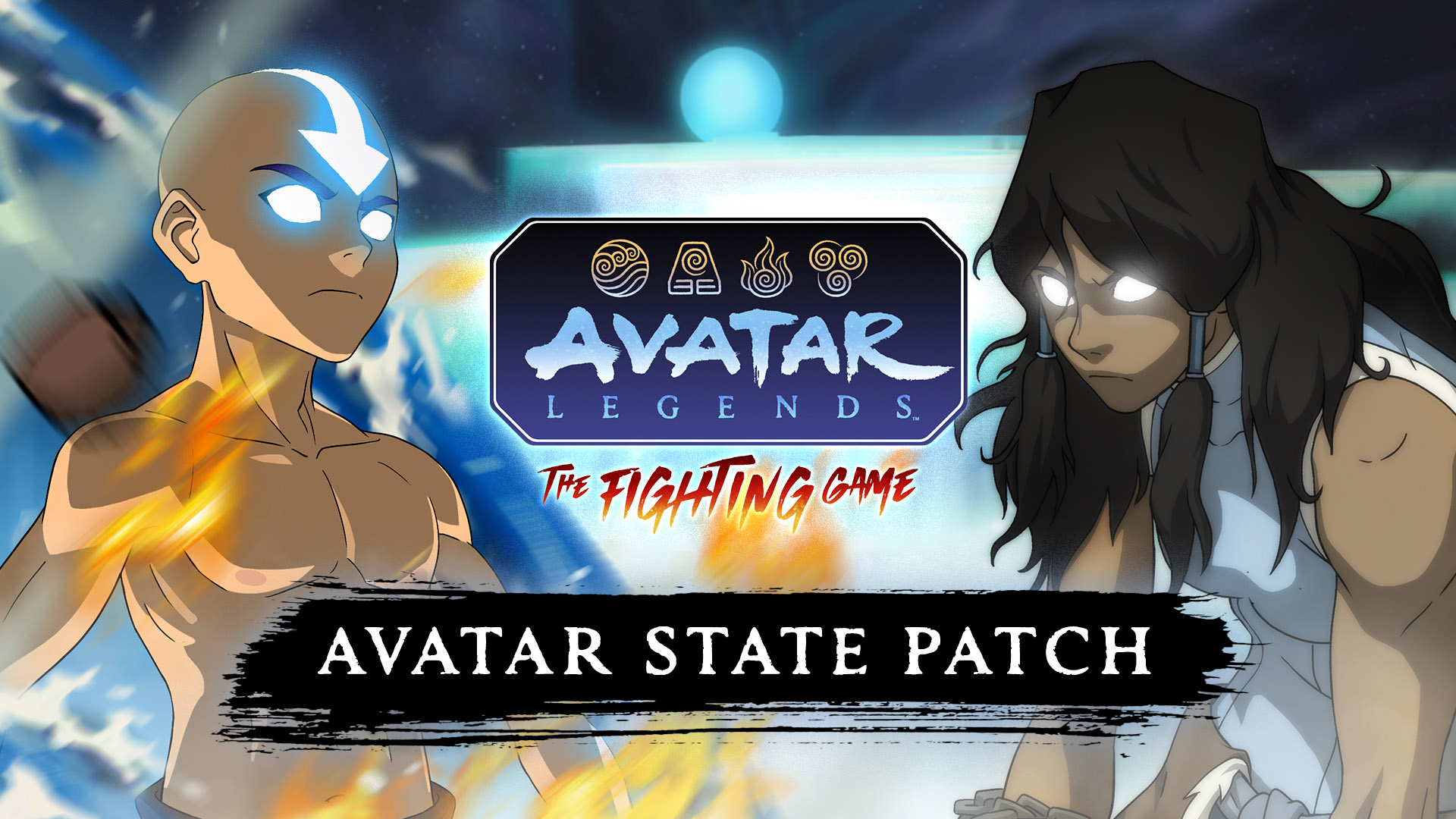
The Avatar State Patch is live on Xbox Series X|S with reworked Avatar Aang and Nightmare Korra, Ranked Mode 2.0, new learning tools and a roster-wide balance pass.
The Avatar State Patch is live on Xbox Series X|S
Avatar Legends: The Fighting Game released its Avatar State Patch on Xbox Series X|S on October 30, 2026. The developer calls it the game's biggest update so far. It redesigns menus and match displays, rebuilds Avatar Aang and Nightmare Korra, introduces Ranked Mode 2.0, adds learning tools and changes balance across the full roster. This is a substantial post-launch refresh, not a single-character adjustment.
The announcement comes directly from Gameplay Group on Xbox Wire. It confirms broad changes but does not publish every frame value in that article; the developer points readers to its full patch notes for exact balance details. We have not played the updated build, so our discussion of competitive impact is analysis of the announced changes, not a hands-on verdict.
The biggest player-facing question is whether the patch makes the game easier to learn while keeping its competitive depth. A new interface can improve clarity, and a ranked redesign can give matches a more coherent purpose. Neither guarantees better matchmaking or a healthier meta on its own. Those outcomes need player data and time.
- Available: October 30 on Xbox Series X|S, according to the developer.
- Rebuilt fighters: Avatar Aang and Nightmare Korra.
- Competitive change: Ranked Mode 2.0.
- Learning additions: new tutorials and Combo Trials.
- Other modes: Story Mode+, difficulty settings and Story stages in Versus.
- Balance: every roster fighter has been tuned.
Aang and Korra are more than costume changes
Gameplay Group says both central fighters received new art, attacks and super moves. The art direction deliberately pushes them apart. Avatar Aang is presented as imposing and controlled, while Nightmare Korra is elusive and unsettling. Their visual language gives opponents a clue about the fantasy each kit is supposed to deliver before a match even begins.
For Aang, the team cites his final battle with Fire Lord Ozai and other Avatar State moments as inspiration. His Avatar's Ascension special lifts him in an air sphere; his new Level 4 super brings in Avatar Roku. These are specific additions named by the developer. They also show how the game uses series references as moveset material rather than simple fan-service wallpaper.
Nightmare Korra's rebuilt kit is described as matching her haunting new presence. The Xbox post discusses the redesign but does not give a full move-by-move comparison in the summary. If you main Korra, the sensible next step is to read the complete official notes and test familiar routes in training mode. A headline cannot tell you whether an old combo still works after a character rebuild.
We see a design risk and an opportunity here. Rebuilding popular characters can make the game feel fresh, but returning players may initially feel that their muscle memory was erased. Strong tutorials and trials can ease that transition. The patch adds exactly those tools, so the pieces support one another at least in concept. How well they work together remains a playtest question.
Roster-wide balance changes could reset the meta
Every fighter has been adjusted, according to the developer. That is the fact; a definitive new tier list is not. A patch touching the whole cast can change matchups in unexpected ways because one fighter's improved tool interacts with everyone else's new options. Early rankings built from a few matches should be treated as provisional.
Two examples in the Xbox Wire post are more concrete. Azula's Ambition's Spark now tracks closer to the opponent, has a larger detonation hitbox and can be flow-cancelled. Sokka can unlock a direct sword-special-to-boomerang cancel after ten successful sword-hit stacks under the specified Master Piandao support conditions. Those details show the patch is not just adjusting damage numbers; it changes how players can route actions.
For Azula players, the announced tracking and cancel changes may increase route flexibility. For Sokka players, the stack condition creates a mid-match goal that opponents can recognize and contest. Those are tactical interpretations from the stated mechanics. We are not claiming either fighter is now top tier. A change can be exciting and still be balanced by recovery, resource cost or opposing tools not described in a short article.
The practical way to assess the new meta is to compare the same matchup before and after patching. Watch whether the added options create meaningful decisions, not just longer combos. Track whether an opponent can respond consistently. That method is more useful than repeating a social-media tier list on launch weekend.
Ranked Mode 2.0 and teaching tools target retention
Ranked Mode 2.0 is one of the headline additions, but the Xbox article does not detail its exact rating formula, placement rules or queue restrictions. We should not invent them. What can be said is that a ranked redesign sits beside new tutorials and Combo Trials, plus quality-of-life changes to story, versus and online play. The developer appears to be addressing both the path into competitive play and the experience of staying there.
That combination matters because a fighting game can lose newcomers before they understand why they lost. A tutorial can explain a mechanic, while a combo trial can give a player a repeatable goal. Ranked play then tests whether that knowledge transfers under pressure. These systems only help if they present clear feedback and fair opponents, but the design direction is coherent.
Story Mode+ and difficulty settings offer another route for players who prefer the Avatar universe to online competition. Story stages in Versus may also make casual local matches feel closer to the show. The Xbox post names these additions without spelling out every unlock condition or stage rule. Check the updated game menus for the current implementation.
A useful first-session check for returning players is to open the new tutorial, run one familiar Combo Trial and then play several unranked matches before committing to Ranked 2.0. That is a reader practice based on the patch structure, not a report of our own match results. It helps separate unfamiliar controls from genuine balance changes.
The fifth Year 1 fighter is now a community decision
The patch also opens a character vote for the fifth Year 1 Pass fighter. The announced candidates are Tenzin, Kuvira, Amon, King Bumi and Asami Sato. Iroh, Ty Lee, Lin Beifong and Bolin are already named for the pass. Eligibility depends on preorder or Deluxe Edition conditions described in the Xbox article, and the voting period is one month. Check the in-game menu and edition terms before assuming your account has a vote.
This is a rare case where a roster roadmap becomes a community argument with an official outcome. Players may vote for a favorite character, a missing combat style or a matchup they want the game to explore. That creates engagement, but it also puts pressure on the studio to keep the other four future additions distinct. Our view is that the vote's long-term value will depend on how clearly the chosen fighter fills a design gap, not simply on who wins a popularity contest.
The short answer is that Avatar Legends has received a large Xbox patch with two rebuilt fighters, a roster-wide tune-up, Ranked 2.0 and more ways to learn. It is a good reason to revisit the game if you bounced off its original systems. We would wait for full patch notes and sustained player experience before declaring the competitive scene fixed.
CHECK THE ORIGINALS.
Facts and update details above are based on these official sources. Details can change as the game is updated.
- Avatar Legends: The Fighting Game Enters the Avatar State ↗Xbox Wire / Gameplay Group
Loading comments…